Beyond Skills: How Digital Talent EU Days Connected People, Industry and Opportunity
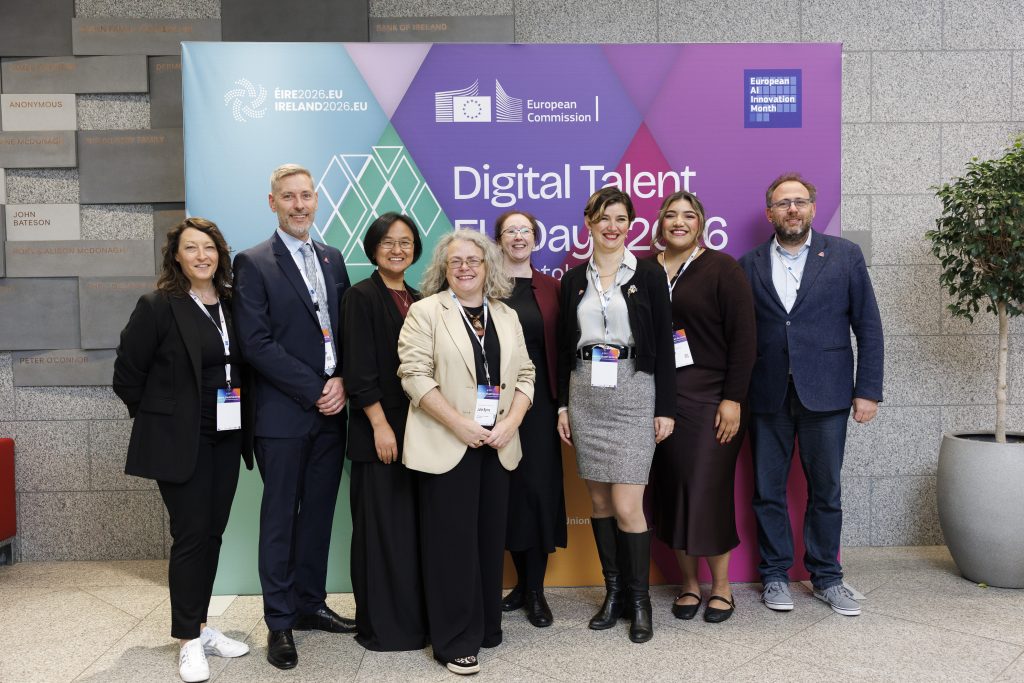
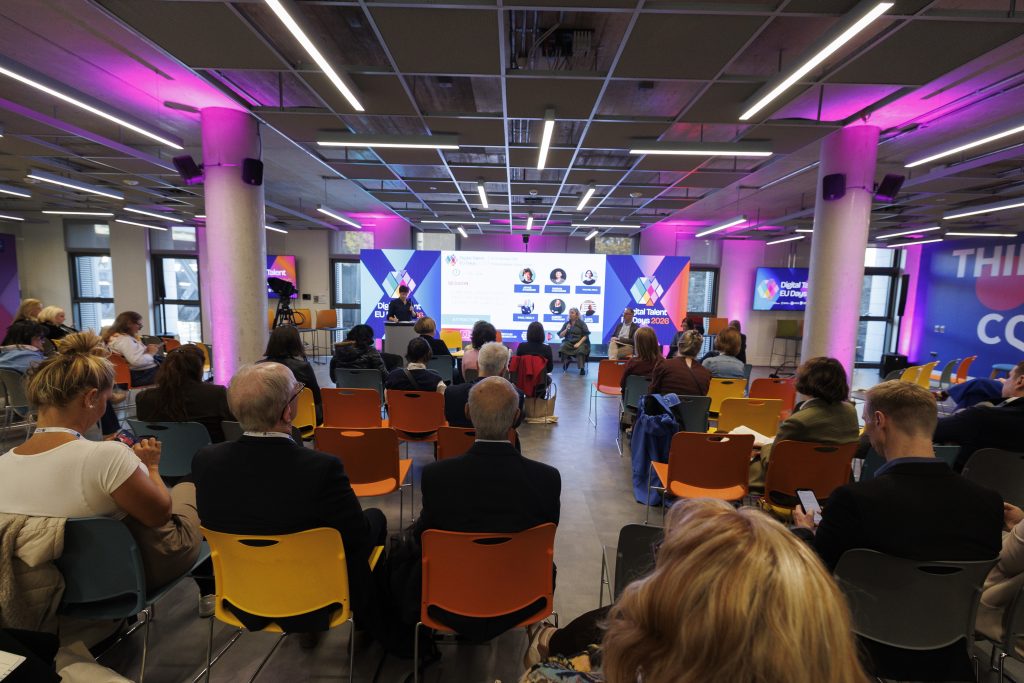
Digital Talent EU Days brough policymakers, industry leaders, educators, researchers and community organisations to Trinity Business School in Dublin on 15-16 October 2026. Over two days, a shared challenge was explored; how Europe could develop, attract and retain the talent needed for its digital future.
The discussions went beyond the need for more technical specialists. Participants discussed how AI was changing jobs and learning, how education and training could respond to industry demand, and what helped people build lasting digital careers.
Organised by LEADSx2030 and Connecting Women in Digital organised in partnership with the European Commission, Ireland’s Department of Further and Higher Education, Research, Innovation and Science, and local partners including the Irish Digital Skills and Jobs Coalition and BlockW.
Setting the scene for Europe’s Digital Talent
The official welcome featured Rehana Schwinninger-Ladak, Linda Doyle, Provost of Trinity College Dublin, and Laurent Muzellec, Dean of Trinity Business School. Doyle highlighted universities’ role in developing the skills needed for the future and expressed her confidence in Europe’s contribution.
Na Fu and Sarah Rose then opened the substantive programme with “State of Digital Talent EU 2026”, drawing on findings from LEADSx2030 and Connecting Women in Digital. Their contributions framed digital competitiveness as a question of how effectively Europe developed, attracted and retained talent—and whether it mobilised the full talent pool.
Sharing good practice, identifying solutions to common challenges and taking co-ordinated action provided a starting point for the discussions that followed.
Competence frameworks: A foundation or a constrain
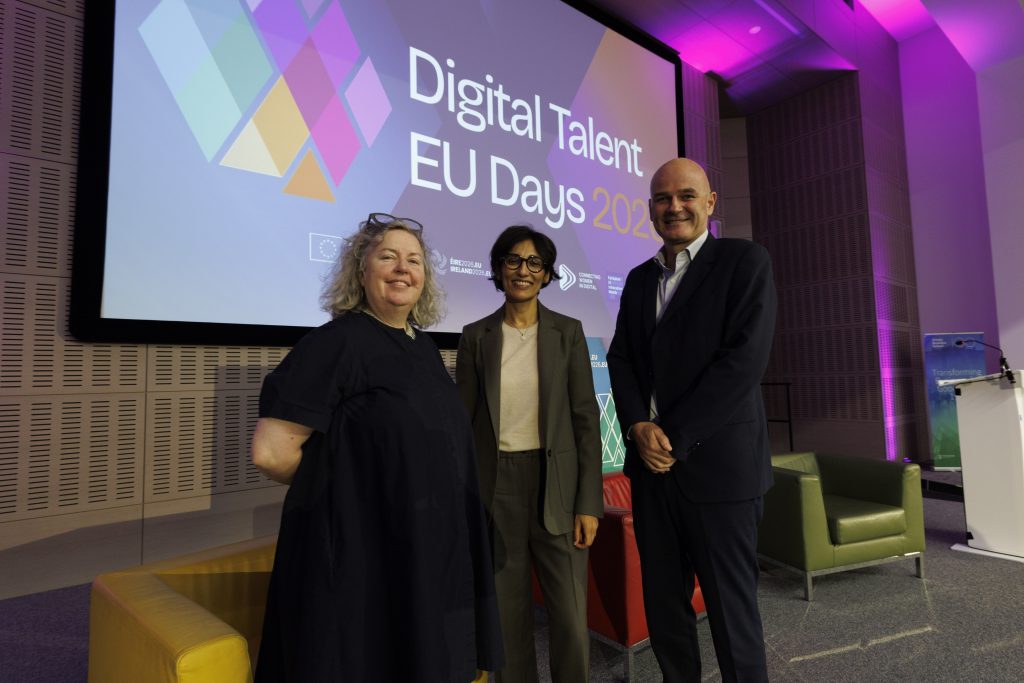
“Competence Frameworks: Bin or Keep?” challenged participants to reconsider a familiar tool in education and workforce development. Maria-Ribera Sancho, Professor at Universitat Politècnica de Catalunya, and Julie Byrne, Assistant Professor in Online Education and Development at Trinity College Dublin, explored whether competence frameworks remained useful as technologies evolved rapidly.
The discussion analysed the tension between providing a common structure for skills development and relying on definitions of expertise that risked becoming outdated. It considered what this meant for education and training provision, as well as the career pathways those frameworks helped shape.
Opening pathways for international talent
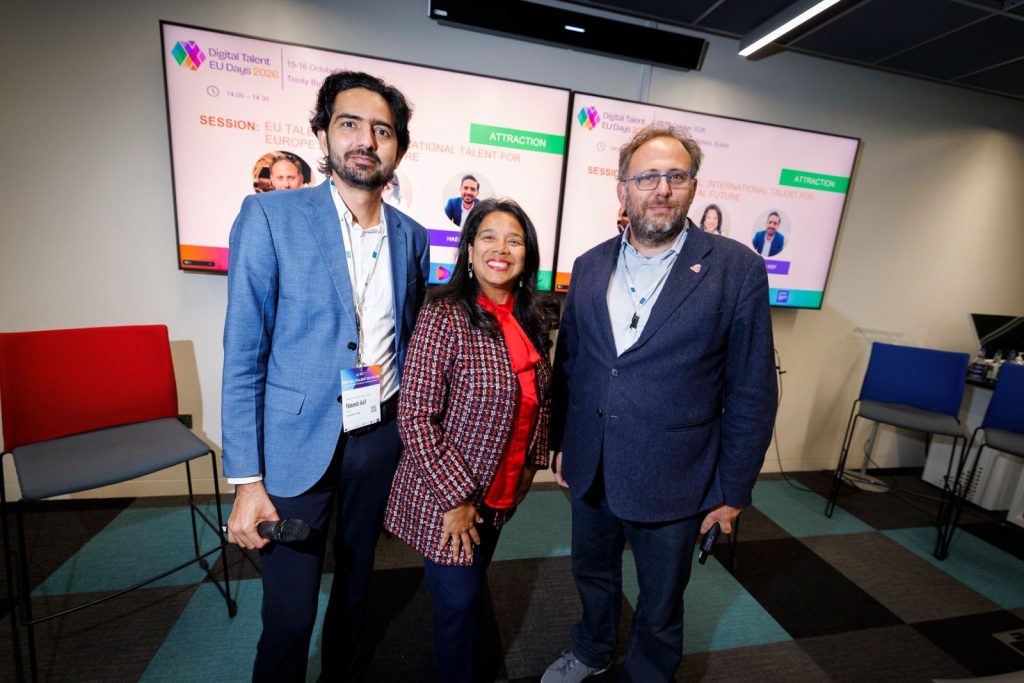
The “EU Talent Pool: International Talent for Europe’s Digital Future” session brought personal and professional perspectives to the question of attracting and retaining international talent.
Moderated by Andrea Biancini of 28DIGITAL, the discussion included Eduvigis Ortiz of Women4Cyber Spain and a representative from Tenplus AB. It explored what drew international professionals to Europe, the practical challenges they encountered and how more accessible and inclusive pathways could support their careers.
The session also considered how international talent could strengthen Europe’s digital and AI workforce, connecting attraction with the conditions that encouraged people to stay and develop their careers.
Launching new subclusters
A key milestone for LEADSx2030 milestone was the launch of the SME Engagement subcluster and AI subclusters, which brought focused attention to two areas of advanced digital skills develop.
Connecting SME Training with career development
The SME Engagement workshop explored how advanced digital skills training could help smaller business retain talent, while giving SMEs a more sustained role in programme design and delivery. The discussion considered how training providers could build a lasting pipeline of SME contributions, rather than relying on occasional consultation.
Circular economy businesses, including repair, refurbishment, remanufacturing and reuse organisation, provided a concrete example. These businesses needed digital skills for their own operations, while their practical experience could also make them valuable partners in developing training.
Developing AI talent beyond technical roles
The AI subcluster session, “From Code to Context: Developing AI-Ready Talent Across Domains”, broadened the discussion beyond the training of AI developers.
It explored how professionals across sectors could combine domain expertise, business acumen and reasoning skills with the ability to apply AI ethically, securely and effectively. Participants considered approaches and emerging models for developing these capabilities at scale, with an emphasis on solving real problems and creating measurable value.
Bringing the Digital Skills Academies and Industry Closer Together
“Building Sectoral Specialisms” explored how the EU Digital Skills Academies could develop targeted talent pipelines while working more closely with industry.
Facilitated by ELEVATE Plus, the session marked the beginning of a new collaboration between the Academies and industry stakeholders. Participants examined how training could better reflect industry demand without overlooking connections between technology fields.
The discussion brought together perspectives from Martel Innovate, AISHA AI Skills Academy, Universitat Politècnica de Catalunya, CYENS Centre of Excellence, the European Cyber Security Organisation, Greece’s National Cybersecurity Authority and Athens University of Economics and Business, the Big Data Value Association, and AIOTI.
Could the “Great Reskill” close Europe’s ICT gaps?
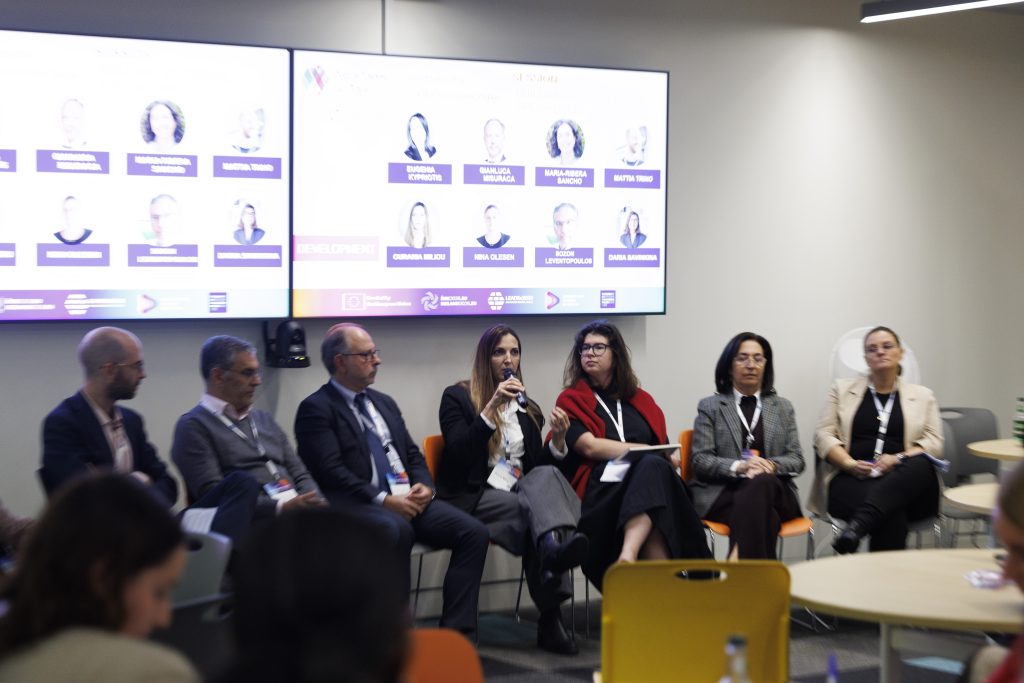
The organised debate “Can the Great Reskill Provide a Window to Close the Gaps in ICT?” placed inclusion at the centre of the workforce discussion.
Contributors included Joyce O’Connor of BlockW; Marian Corcoran of Dublin City University’s Governing Authority; Rachael Ingle of Aon Ireland; Linda Doyle of Trinity College Dublin; Paul Healy of Futurus; and Audrey O’Mahony of Accenture.
Drawing on perspectives from employers, education and wider society, the debate examined what worked in reskilling, who risked being left behind and how training could connect more directly with employment. Particular attention went to women and under-represented groups, and to the practical pathways that could help them enter digital careers.
Leadership at scale and a shared closing perspective
The keynote programme connected the talent discussions with the challenge of leadership. Salvatore Nigro, CEO of JA Europe, delivered “Leading Teams That Build Big: Lessons for Delivering AI at Scale Globally”, focusing on the teams behind large-scale AI delivery.
You are giving an opportunity to the young people, to the next generation, to really untuck the power that they left. Europe, not necessarily in this moment, has the best technology, not necessarily in this moment has a lot of energy to make sure that the technology is power. But Europe has people. Europe has a very vibrant young generation. In Europe, we train over 7.5 million youth from 5 to 75 years old across 40 European countries.
– Salvatore Nigro, CEO of JA Europe
Alessandra Sala, Board Member of the AI Office of Ireland, closed the event with “Building the Tide That Raises All Ships”, bringing together the themes of the two days.
Across the programme, digital talent emerged as more than a question of training more people. The sessions connected skills development with access to opportunity, industry needs, career progression and the ability to apply new capabilities in practice. For LEADSx2030, the new subclusters and closer links between skills initiatives and industry provided concrete starting points for carrying that work forward.