
From 3M job ads to 500K roles: How we measure europe's digital skills demand
One of the most common questions about the 2026 Advanced Digital Skills Dashboard is simple: Where does the data come from?
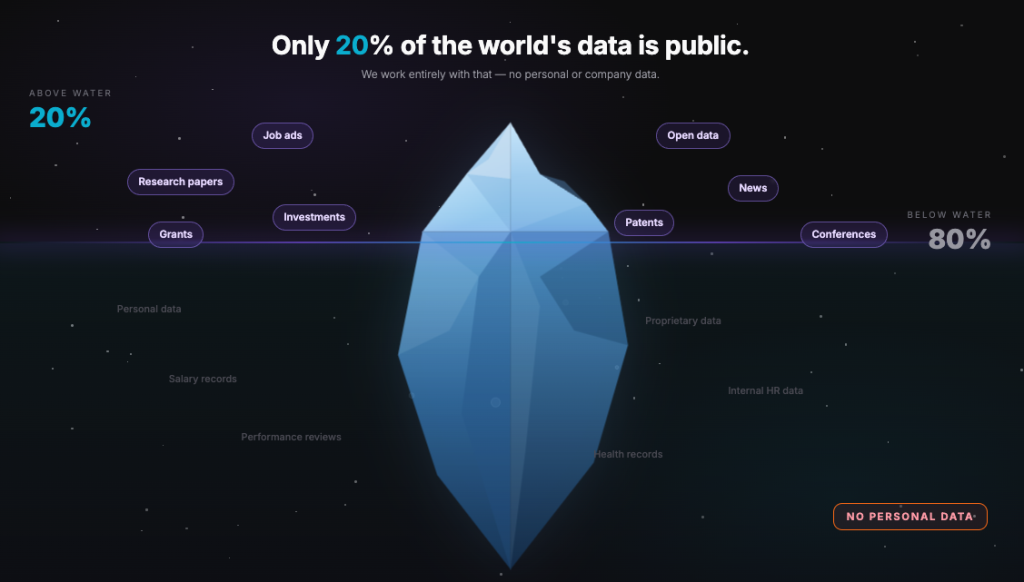
The answer is not surveys, estimates, or private company databases. The dashboard is built using publicly available data from across Europe, including job advertisements, research papers, investment announcements, patents, grants, conferences and news signals.
From 3M Job Ads to 500,000 Roles
The process starts with more than 3 milion job advertisments collected from across Europe. Using an AI- powered semantic classification engine, these advertisements are analysed to identify roles that genuinely require advanced digital skills.
Rather than counting every vacancy mentioning words like “digital” or “data”, the system filters for positions directly linked to advanced digital expertise.
The result:
3M+ job ads + AI classification + 200K advanced digital skills vacancies
These findings are then combined with European labour market data to project demand across the wider economy, leading to an estimate of approximately 500,000 advanced digital roles needed across Europe.
Why the Numbers Increased
Recent job advertisements increasingly contain AI-generated content, making labour market analysis more difficult. For the 2026 dashboard, additional filtering was introduced to remove obvious AI-generated noise and weak signals. Rather than inflating demand, this methodology focuses on identifying vacancies that genuinely reflect advanced digital skills requirements. The result is a more realistic picture of Europe’s digital talent needs.
Understanding the Dashboard Structure
The dashboard is built on three levels:
- Skills; these are the atomic unit of the data. Examples include Python, SQL, Docker and TensorFlow. Each skill has a dingle fixed demand value, regardless of where it appears.
- Skill Pockets; Skills are grouped into thematic clusters such as Machine Learning or Cloud Infrastructure. Each pocket has its own demand value measured directly form the labour market.
- Tech Areas; Skill Pockets sit within broader Tech Areas such as Artificial intelligence, Cybersecurity, Cloud Computing or Data Science. Because the same pocket can appear in multiple Tech Areas, users must always select a Tech Area first before exploring pocket-level demand.
The Big Picture
The dashboard is designed to provide an evidence-based view of Europe’s advanced digital skills landscape. By combining AI-powered analysis with large- scale public data sources, it helps policymakers, education providers, employers and learners understand where demand is growing, where skills gaps exist, and where future investment is needed. Behind every number is a transparent methodology: public data, rigorous filtering, and a focus on real demand for advanced digital skills across Europe.